I build the systems behind a modern go-to-market
Built with AI and automation instead of a large engineering team: Clay enrichment, signal-based outbound, CRM data governance, and RevOps automation, the systems a modern revenue team runs on.
 Clay
Clay Apollo.io
 Freckle.io
 HubSpot
 Snowflake
 Instantly.ai
 HeyReach
 n8n
n8n Ergo
Ergo Claude Code
The systems a go-to-market team runs on
Clean data, the right targets, instant follow-up, and one source of truth: that is the stack a modern GTM engine runs on. Here is the whole map, with working builds for what is live and the next two already underway.
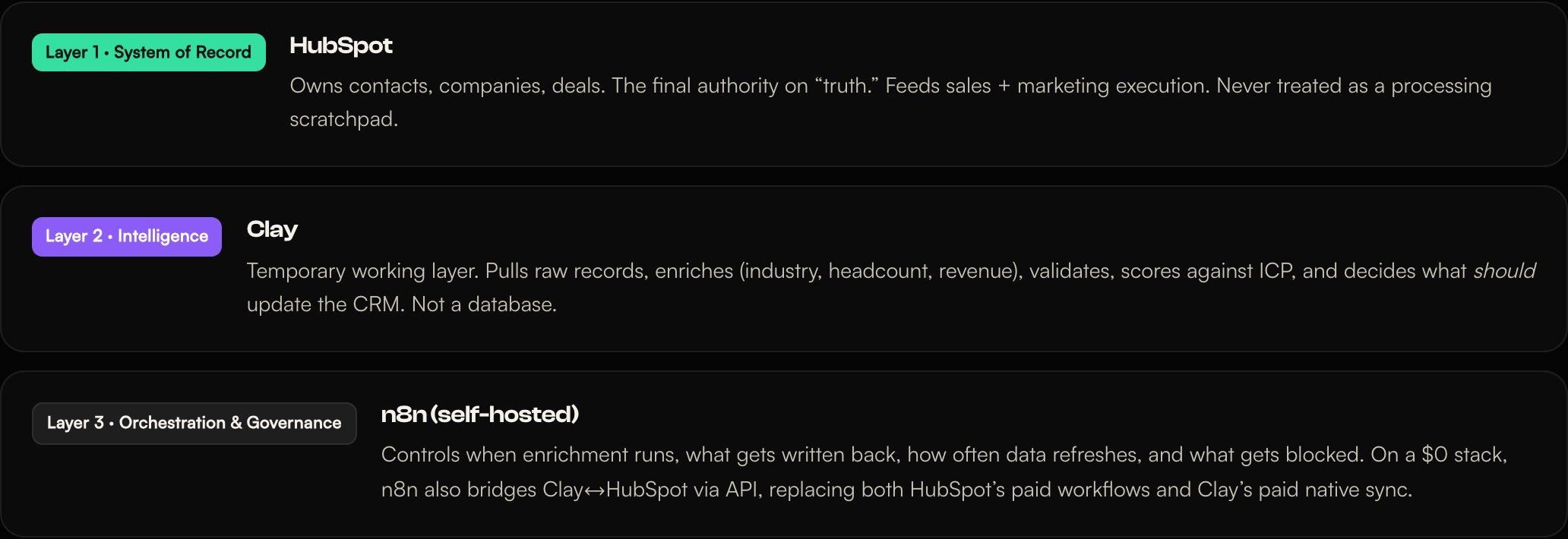
Enrichment & ICP Engine
A governed HubSpot × Clay × n8n pipeline that enriches raw records, scores them against an ICP, and writes back under strict rules, so it cleans the CRM instead of polluting it.
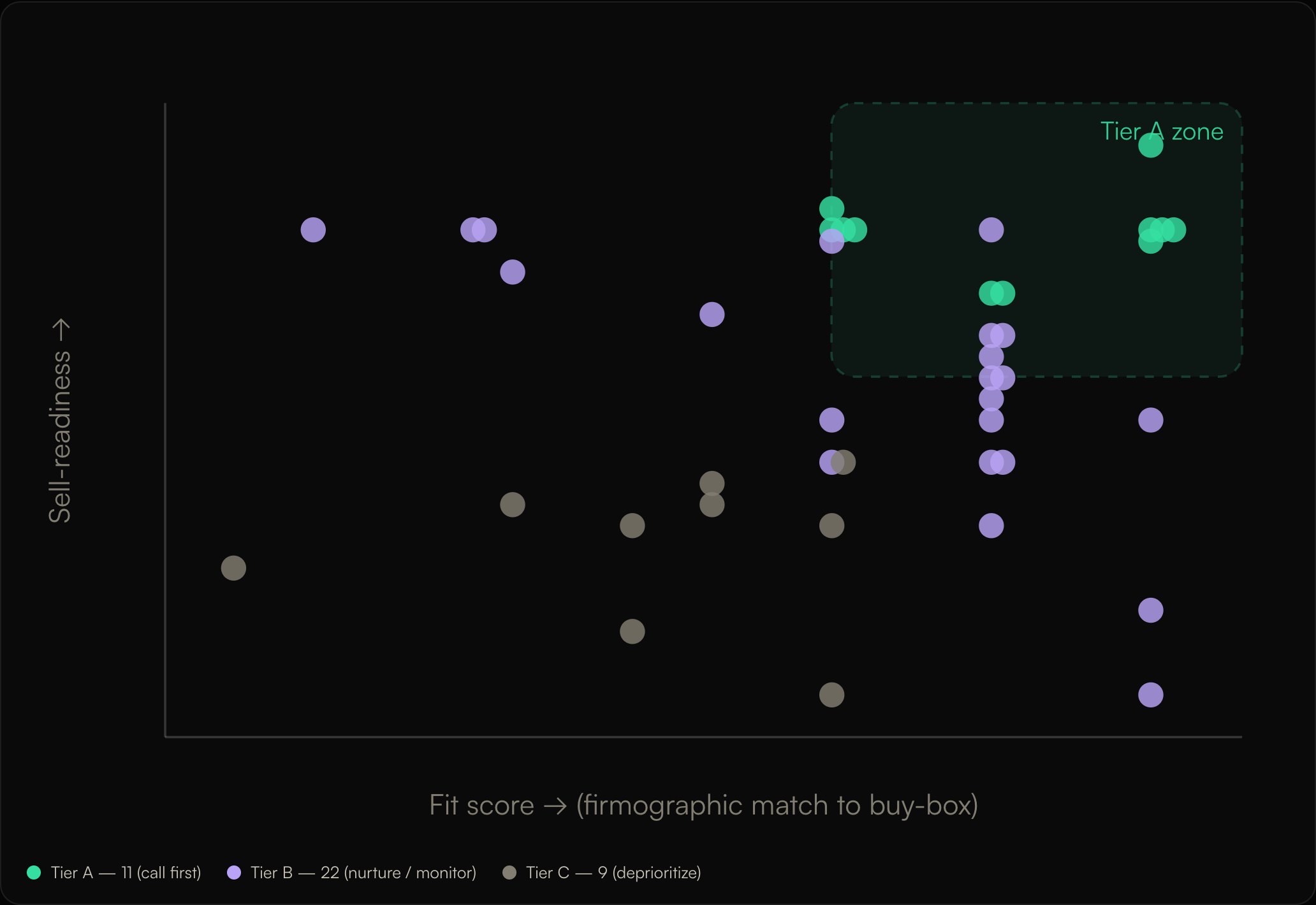
Account Sourcing Engine
A signal-based sourcing engine that maps a fragmented market, scores every company on a two-factor Fit + Sell-Readiness model, then verifies the top names live in Clay before anyone reaches out.
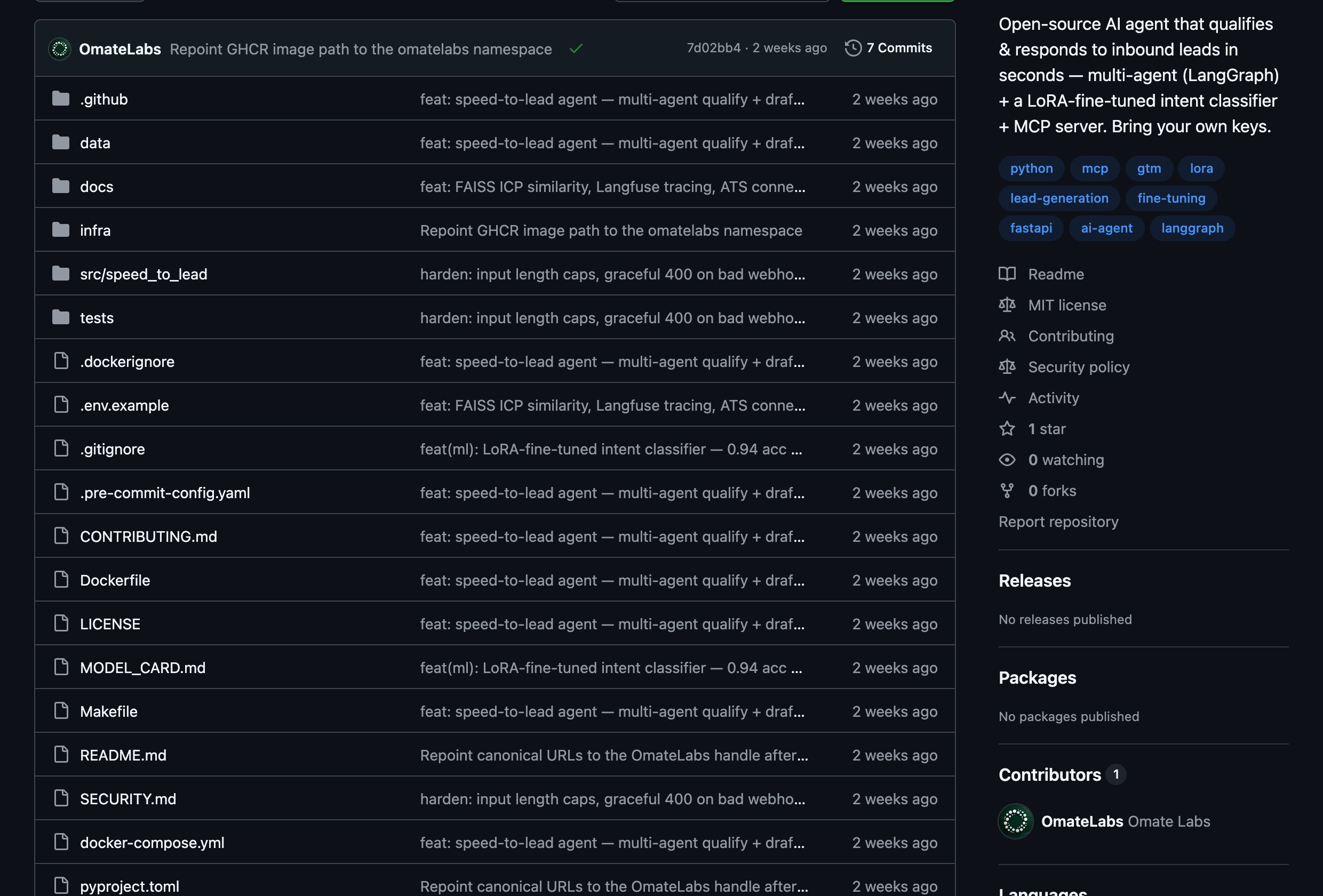
Speed-to-Lead Agent OSS
An open-source AI agent that qualifies and routes inbound leads in seconds: a LangGraph pipeline plus a LoRA-fine-tuned intent classifier, served over an MCP server.
GTM Data Hub
A unified GTM data layer on Snowflake, fed by HubSpot and the rest of the stack, that Claude queries in plain language.
Data Quality Engine
Data the whole stack can trust: test every provider against first-party truth, score their accuracy, and keep only the source that wins.
I build for revenue because I sold it first

I came to GTM engineering from the commercial side, not from software. I ran full-cycle sales, demand generation, and the automation around them, then taught myself to build the pipeline systems I always wished I had as an operator.
I’ve run the full motion
Full-cycle sales, demand generation, and live-event operations under real pressure, plus a 200+ member community I built and ran.
I build the machine
Founder of Omate Labs. I do the engineering myself: schema design, automations on self-hosted n8n, fine-tuned models, and the dashboards on top, shipped and running in production.
Open to GTM Engineer and RevOps roles.
Systems that turn go-to-market into a repeatable machine, built end to end. The fastest way to reach me is email or LinkedIn.